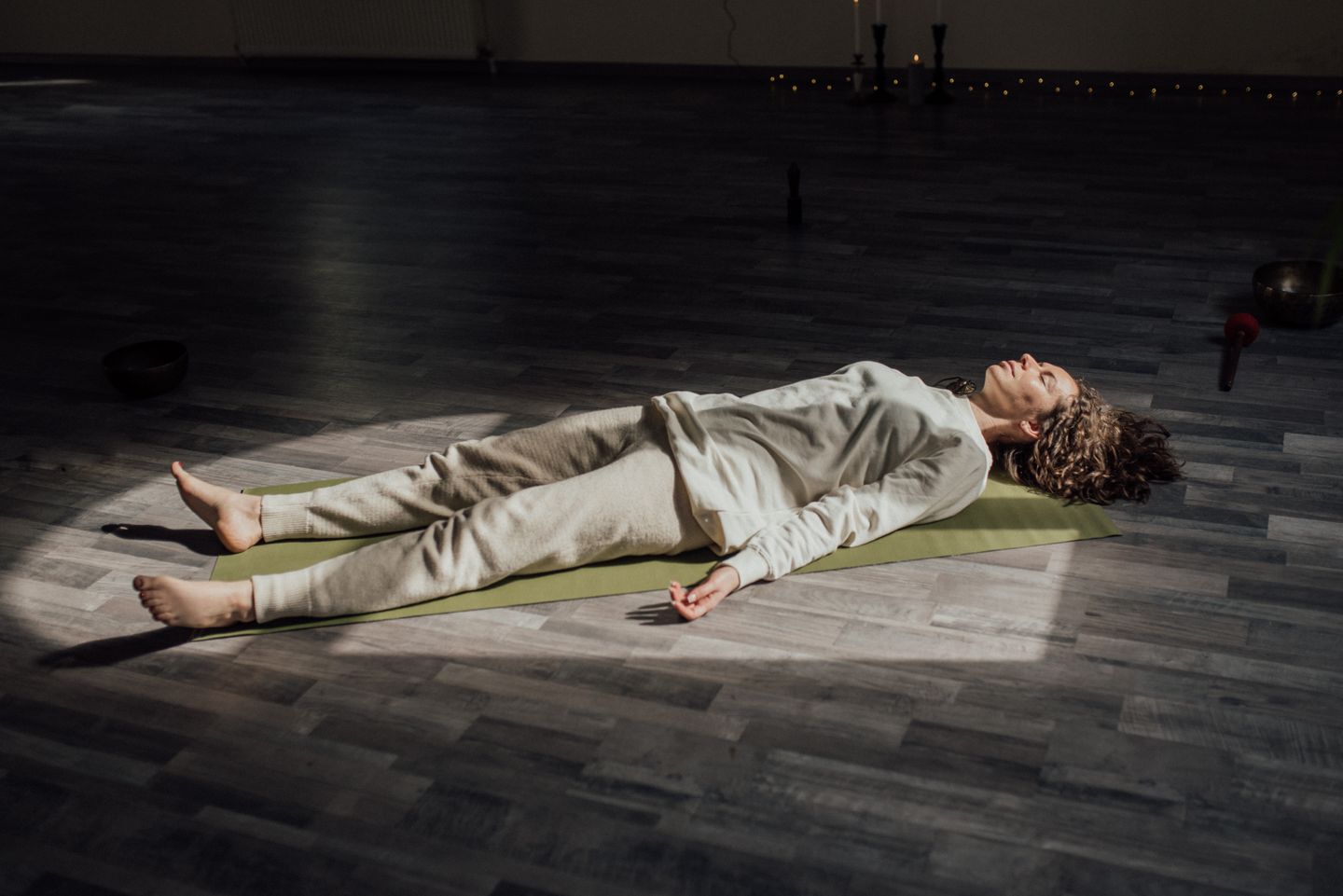
Choose an accessible resting place
Use a clear surface where you can lie down and get up comfortably. A mat may be useful on a firm floor, but its presence does not make floor rest necessary. If getting down is inconvenient, choose a familiar supported seat instead and let that be your resting option.
Before reclining, leave enough space for your arms and a clear route for getting up. Put anything you need within easy reach. Decide whether the surface feels comfortable for the rest you intend to take; a different location is a reasonable choice when the floor feels unwelcoming.
Give your legs a choice
If lying on your back suits you, try bending your knees with your feet supported on the surface. Place the feet where they feel settled rather than holding them tightly together. You can adjust the distance between them or choose another position if this arrangement does not feel easy.
Another option is to lie on your side in a familiar, comfortable shape. Let your knees bend as much as you prefer and use suitable head support if helpful. Avoid trying to create a formal pose from an ordinary rest. Choose an arrangement you can leave without feeling stuck.
Keep the upper body uncomplicated
Place your arms where they do not need to be held in position. Hands can rest beside you, on your torso, or in another easy arrangement. Check whether your head feels comfortably supported. A small change in arm placement may be more useful than trying to make both sides symmetrical.
Let breathing continue naturally. Rest does not require counting, deepening, or holding a breath, and you do not have to close your eyes. You may look at a familiar point or simply notice the room. Keep the experience ordinary enough that changing your mind remains an easy choice.
Move when the arrangement stops working
Resting still is optional. If you want to shift, move your arms, bend a leg differently, or return to sitting, do so. A position that felt convenient at first may become less pleasant later. Changing it keeps the rest responsive rather than turning stillness into a task to complete.
Finish by returning upright at your preferred pace, using a familiar route and stable support when needed. Notice which setup was easiest to enter and leave. That detail can guide another session without making the same resting shape a requirement.
A few common questions
Must my legs stay straight?
No. Bend them or choose a comfortable side-lying arrangement if preferred.
Is floor rest essential?
No. A familiar supported seat is another practical resting option.
Published by the Milarela journal.