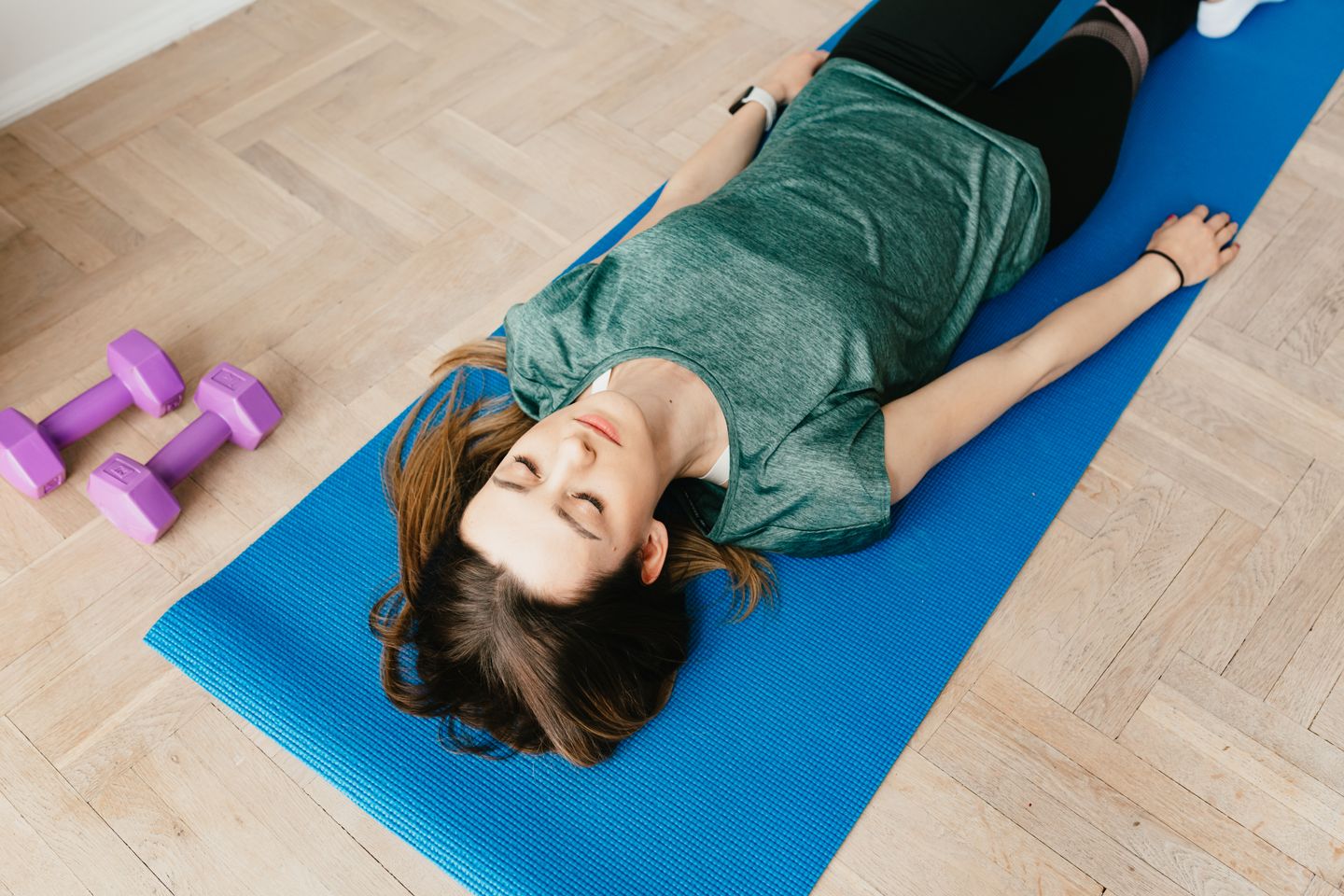
Choose a realistic arrangement
Look at how the household uses the room you have in mind. Avoid placing a mat across a doorway or occupying a surface someone needs immediately. A clear side area or a seated session may work better than rearranging the main room during a busy part of the day.
When useful, let the people sharing the space know that you plan a short session. Keep the request specific: a little clear floor room or a few minutes before a conversation. There is no need to ask the entire household to change its atmosphere for an ordinary home practice.
Pick movements you can leave easily
Choose straightforward positions that are simple to enter and exit. Supported sitting and easy standing movements can be convenient when you expect an interruption. Avoid creating a complicated arrangement that needs several objects moved before you can respond to someone or clear the space for another use.
Before starting, decide where your equipment will go if you stop early. A mat can return beside a cupboard, and a support can go back to its usual place. This small decision lets you finish neatly without leaving the shared room full of items you planned to use later.
Respond to interruptions plainly
If someone needs your attention, bring the movement to an easy stopping point before responding. You may be able to continue afterward, or the interruption may become the end of the session. Neither outcome needs a story about lost concentration or a practice that has somehow failed to count.
Ordinary room sounds can remain part of the setting, but you do not have to welcome every distraction. If the room becomes unsuitable, change locations, shorten the plan, or stop. Flexibility includes choosing a more convenient time rather than trying to prove you can practice through any conditions.
Keep boundaries useful and modest
Afterward, consider what would make the arrangement clearer next time. Perhaps the chosen room was fine but the timing overlapped with someone else's routine. You can adjust one practical detail without turning home yoga into an elaborate scheduling negotiation or claiming a permanent corner that others cannot use.
A shared-space session can stand on its own, even with conversation or an unexpected ending. Let the household remain a household. Give practice a clear beginning and adaptable ending, with consideration for others and choices that keep it comfortable.
A few common questions
Do I need a private room?
No. Use a clear shared area when the arrangement suits everyone involved.
Should I restart after an interruption?
Only if you want to. Continue, shorten the plan, or finish there.
Published by the Milarela journal.